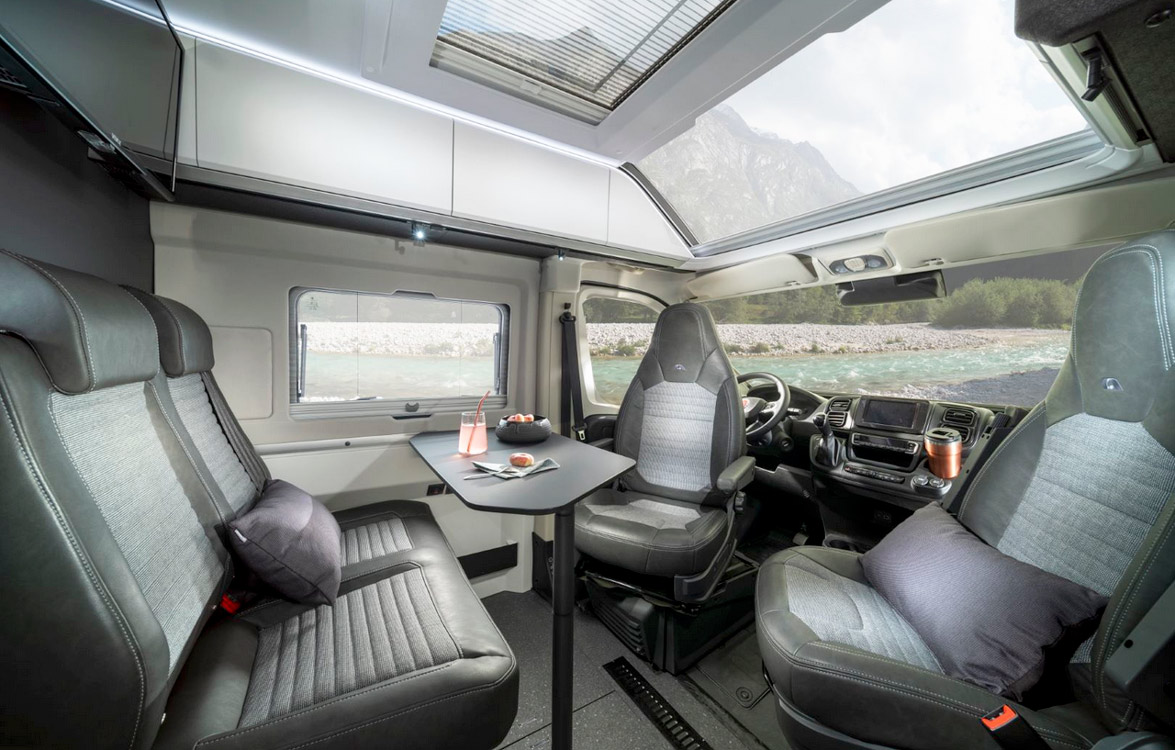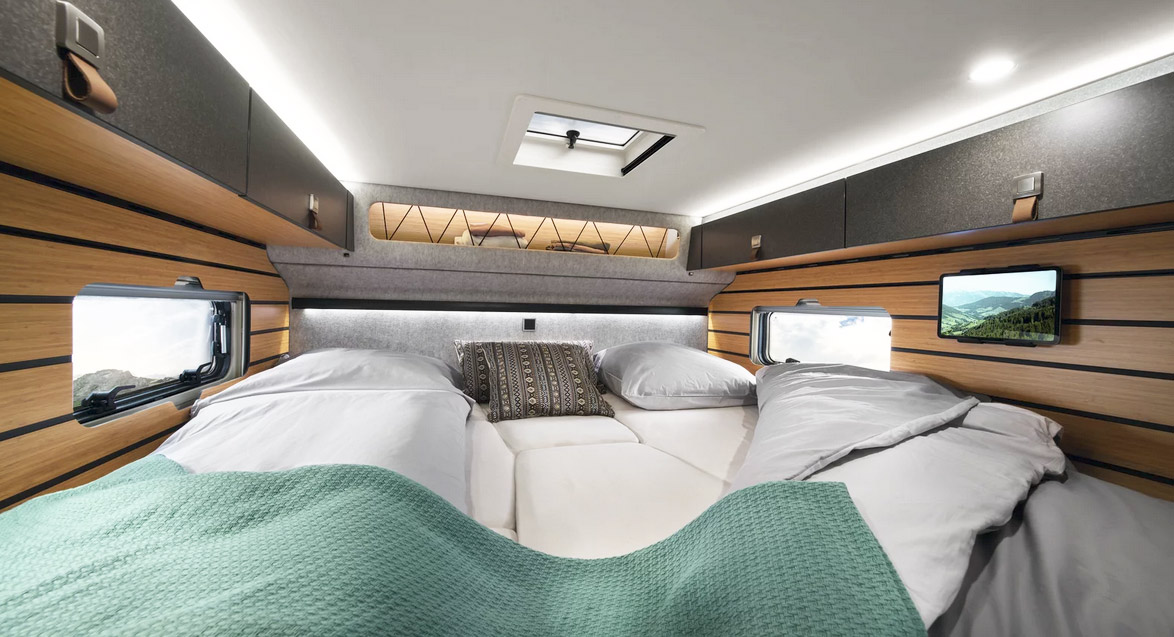
Agricultural machinery is among the most sophisticated work machines available today. It must function reliably and offer a high level of comfort to drivers who often work more than twelve hours a day. This includes good noise insulation, stable climate control, protection from dust and a well-designed sense of space. At the same time, controls must be clearly arranged and accessible with minimal effort. Cooling compartments and additional storage space have long been standard features in modern machines. These requirements place high demands on trim elements and their integration into the production process. Components must be robust, precisely manufactured and easy to assemble. Equally important is quick access for service work in the interior. With our expertise in thermoforming technical nonwovens, water jet and laser processing, CAD design, assembly and pre-assembly, we develop tailor-made components for agricultural technology and the automotive industry. Let us work together to realise solutions that are functionally convincing and fit perfectly into your machines.
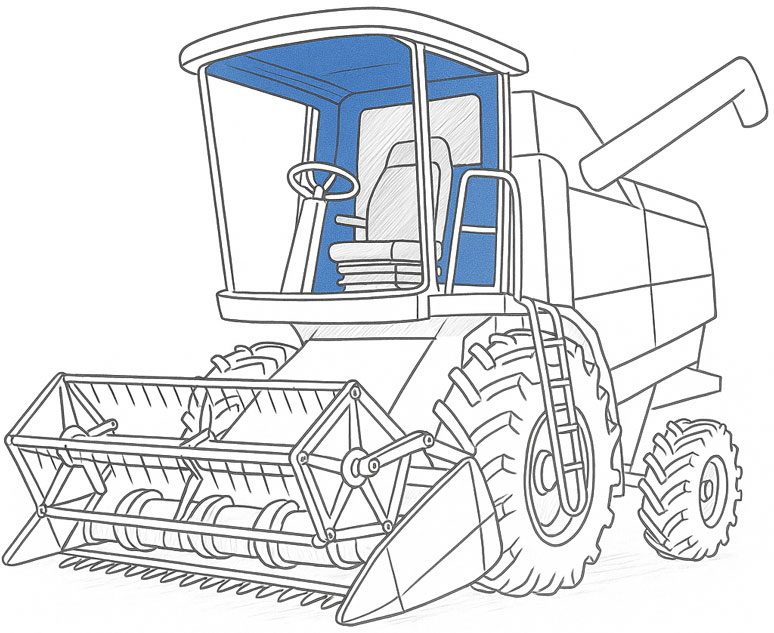
Effective noise insulation is crucial in agricultural machinery because drivers often work for many hours at a time and are exposed to high noise levels for long periods. A quiet interior reduces fatigue, increases concentration and thus enhances both comfort and safety. Trim elements with a carrier material made of technical nonwoven fabric make an important contribution to this. The porous material absorbs sound waves, prevents disturbing resonances and improves the acoustic properties of the entire cabin space. Its effectiveness can be determined using parameters such as sound absorption coefficient or frequency curves from standardised test procedures. We are happy to support our customers in selecting the right combination of materials and component geometry to develop an optimally tailored acoustic solution for each machine.
Agricultural machinery of all kinds is used in all weather conditions. Heavy boots, tools in pockets, dogs in the cab and dust, dust everywhere – all of this is normal, and the materials used in the interior of agricultural machinery must be designed to cope with it. This means that surfaces must be scratch and impact resistant and, above all, easy to clean. Nevertheless, these technically advanced, mobile workplaces are expected to offer maximum comfort. The surfaces should therefore be appealing to the touch and visually appealing, while also being durable. The right substrate with dirt-repellent fabrics enables both: robustness and a touch of luxury.
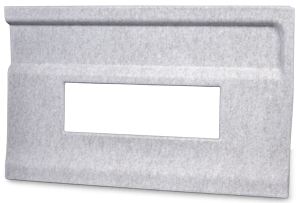
Our trim parts are designed to be easily implemented into the series production process of your vehicle. Together with your engineers, we develop the desired shape, for example the trim for a cab rear wall, and then produce it in such a way that it can usually be fitted into the cab in a single operation. Other adjacent trim parts, such as headliners and A-pillar trim, are also shaped to fit seamlessly into your workflow.
An agricultural machine is a workplace! And one that is exposed to extreme weather conditions: tractors operate in extreme heat and freezing cold, and their air conditioning systems counteract both extremes. This in turn puts strain on plastics and makes them brittle, textiles bonded to carrier plastics come loose, and condensation and vibrations do the rest. Our composite materials are one-piece, with the substrate and surface fused together inseparably and requiring no additional adhesives. They also remain dimensionally stable and elastic even at extreme temperatures. And they perform their functions unwaveringly: breathability, sound insulation, aesthetics.
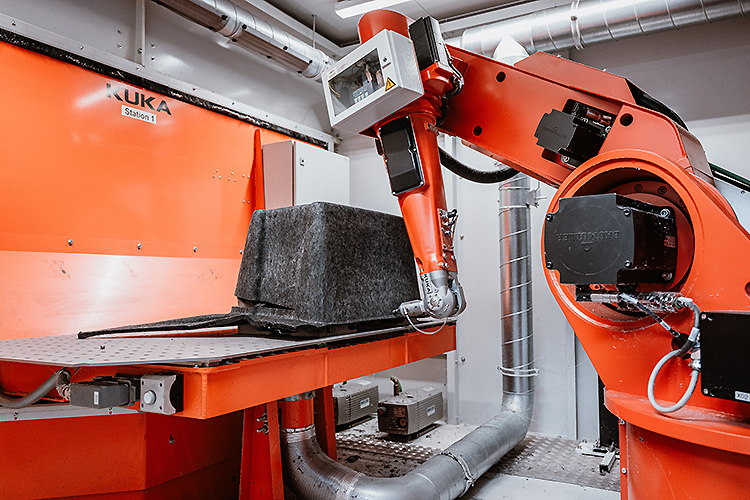
CO₂ laser cutting offers decisive advantages for cladding parts. The cutting edge is guided with high precision, so that even complex contours can be produced cleanly and with repeat accuracy. At the same time, a slightly sealed edge is created as the laser thermally closes the fibres. This prevents fraying and ensures that the edge remains stable and dimensionally stable even with intensive use. Compared to water jet cutting, the cut zone is significantly more robust, which is particularly advantageous in agricultural engineering, where components are exposed to high mechanical stresses and heavy soiling. CO₂ laser cutting thus combines technical precision with long-lasting edge quality – ideal for demanding environments.